If you’ve spent any time scanning an Indian menu, you’ve probably seen vindaloo flagged with a little chili icon… or three. It’s earned a reputation as the dish you order to prove something. But if you’ve ever asked “what is a vindaloo, actually?” the real answer is a lot more interesting than “the spicy one.” It’s a story that starts in Portugal, not India, and it’s about a lot more than heat.
At Cafe Spice, our Chicken Vindaloo is one of our most-loved dishes, so let’s dig into where it actually comes from.
Vindaloo Started in Portugal, Not India
Here’s the twist most people don’t expect: vindaloo isn’t originally an Indian dish at all. It’s a Goan adaptation of a Portuguese recipe called carne de vinha d’alhos, meat marinated in wine and garlic. The dish made its way to India in the 15th century along with Portuguese explorers.
The name itself is a bit of a linguistic fossil. “Vindaloo” is essentially a garbled mispronunciation of the Portuguese phrase for the original marinade. Say “vinha d’alhos” a few times fast, and you can start to hear how it drifted into “vindaloo” over centuries of local pronunciation.
From Ship’s Pantry to Goan Kitchen
The original dish wasn’t designed to be a showstopper, it was designed to survive a months-long sea voyage. Portuguese sailors needed a way to keep meat edible on long journeys, and marinating it in a mixture of vinegar, salt, garlic, and wine was their solution for preservation and flavor.
When Portuguese traders settled in Goa, on India’s southwestern coast, that preservation technique came with them and Goan cooks made it their own. Traditional wine vinegar wasn’t readily available locally, so cooks adapted, and the dish evolved to incorporate chiles, tamarind, black pepper, cinnamon, and cardamom. Which build the layered, spiced flavor profile vindaloo is known for today. That combination of tangy vinegar and warm, earthy spice is what separates a real vindaloo from a dish that’s just been dialed up on heat.
Where the Chili Heat Actually Came From
If vindaloo started as a mild, vinegar-and-garlic preservation dish, where did the heat come in?
The answer is another piece of the same colonial trade story: chile peppers were themselves a legacy of Portugal’s global empire, imported to India from the Americas. Before that introduction, Indian cooking relied on black pepper for heat. Chiles as we know them today didn’t exist on the subcontinent yet.
Once chiles arrived in Goa, they became a natural fit for the vindaloo marinade, adding real heat on top of the dish’s existing tang and spice. But (and this is the part that surprises a lot of people) traditional Goan vindaloo was never meant to be blisteringly, one-note hot.
So Is Vindaloo Actually That Spicy?
This is where a lot of the modern reputation gets it wrong.
Diners and food writers who’ve traveled to Goa and sampled the dish in its home region often come back with the same observation: it’s rich, tangy, and warmly spiced but rarely as fiery as its reputation in the West suggests. One food writer who spent a week sampling vindaloo across Goan restaurants described the dishes as medium-hot at most, noting that back home, the same dish is served far hotter.
That gap has a clear explanation. When vindaloo crossed over into British curry houses, the dish changed shape. The sharpness of the vinegar faded, and the careful balance of spices got buried under a much heavier dose of chiles. Vindaloo became shorthand in the UK for “the hottest thing on the menu” — a badge of honor for spice-eating challenges — rather than the tangy, complex, Portuguese-Goan dish it actually is.
Real vindaloo is all about the balance between tang, garlic, warm spice, and yes, some real chili kick, all working together.
What Makes a Vindaloo, a Vindaloo
If you’re trying to identify an authentic vindaloo (versus a dish that’s just labeled “extra hot” on a menu), here’s what to look for:
● A vinegar base. This is the ingredient most Western versions lose. Real vindaloo should have real tang, not just heat.
● Garlic, front and center. True to its Portuguese roots, garlic is a foundational flavor, not an afterthought.
● Warm background spices. Cinnamon, cardamom, and black pepper add depth that pure chili heat can’t replicate.
● Tamarind, in many recipes. Adds a fruity sourness that rounds out the vinegar’s sharpness.
● A protein worth marinating. Traditionally pork, though chicken and lamb versions are widely enjoyed today. One quirk worth knowing: traditional Goan vindaloo doesn’t actually include potatoes — that’s a common mix-up with the Hindi word “aloo,” which means potato.
Why Vindaloo Is Worth Ordering (Even If You’re Spice-Cautious)
Here’s the thing about vindaloo’s reputation: it scares off a lot of people who would actually love it. While our modern-day take definitely brings the heat, vindaloo’s true identity is built on balance. A fiery dance of vinegar, garlic, warm spices, and bold chilies working together. It’s genuinely one of the most flavorful, complex, and vibrant dishes in Indian cooking, not just a test of endurance.
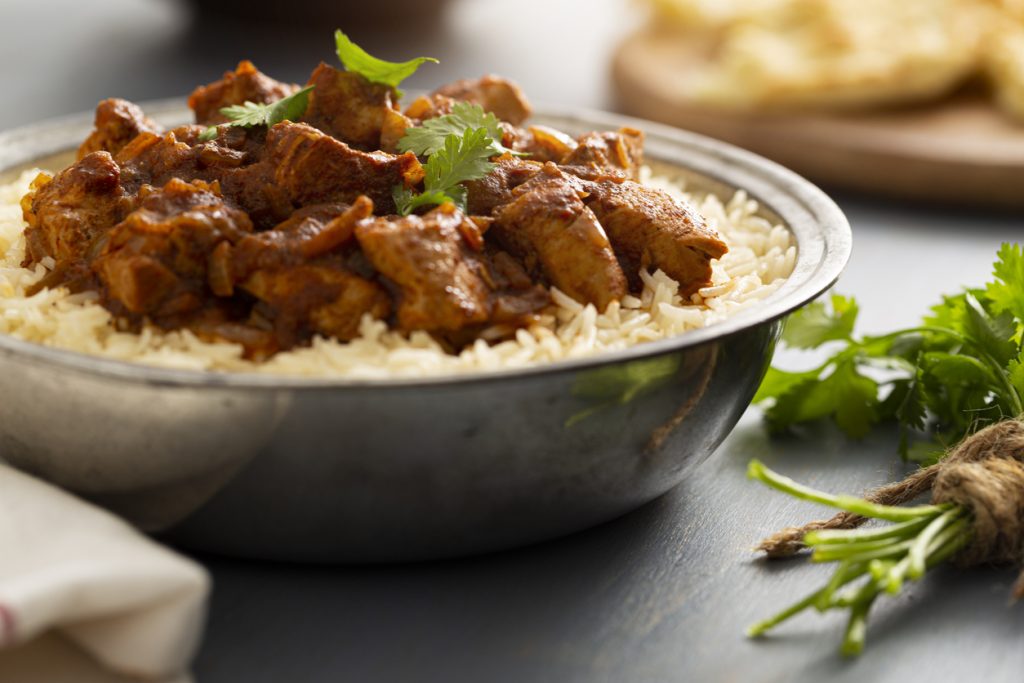
At Cafe Spice, our Chicken Vindaloo gives this iconic classic a modern upgrade without losing its soul. It’s created with the same foundational techniques a Goan kitchen would use—never a shortcut version, and never just one-dimensional heat.
To complete the experience, we pair it with aromatic Basmati rice infused with bright lemon juice, golden turmeric, tempered mustard seeds, and savory lentils to balance every fiery bite.
If you’ve been curious about vindaloo but hesitant to dive in, this is the perfect dish to broaden your palate. And if you’re already a heat lover? You’ll taste the difference immediately—a bold, modern dish with centuries of history in every bite.
Where to Find Cafe Spice Chicken Vindaloo
Ready to taste the real story for yourself? Our Chicken Vindaloo with Lemon Rice is available in the refrigerated section at grocery stores and natural food retailers nationwide, and you can explore our full lineup of ready-to-eat meals at cafespice.com.
Bold, tangy, and centuries in the making, that’s a real vindaloo.