Indian cuisine is known for its color, aroma, and depth of flavor — but for new explorers, it can feel overwhelming at first glance. Regional differences, spice blends, sauces, and cooking styles vary widely across the country, and many dishes carry centuries of tradition and technique.
This guide breaks down the essentials: which dishes to try first, how spice levels work, and how to confidently explore Indian flavors without feeling lost. Whether you’re searching for chicken vindaloo, curious about creamy curries, or looking for approachable Indian ready meals, this is your starting point.
Why Indian Cuisine Is So Diverse
India’s culinary identity is shaped by:
- Climate and geography
- Agriculture and local crops
- Religion and community traditions
- Generational family recipes
This results in tremendous variety — mild and creamy dishes from the north, coconut-forward dishes from the south, mustard-based flavors from the east, and earthy lentil dishes from the west.
For beginners, this means there’s truly something for every kind of palate.
Understanding Spice Levels (Not All Indian Food Is Spicy)
One of the biggest misconceptions is that “all Indian food is spicy.”
And while Indian food and spice go hand in hand, in reality, spice ≠ heat.
In Indian cooking, “spice” refers to flavor, not intensity. Many spices — like cumin, coriander, cinnamon, cardamom, or bay leaf — add warmth, earthiness, or sweetness.
Heat comes specifically from chilies, and many popular dishes actually have low to moderate heat. Great starter dishes include:
- Creamy tomato-based curries
- Spinach or vegetable-based dishes
- Mild chicken or paneer options
- Lentil stews (dal) with subtle spice
Understanding this helps first-timers choose dishes confidently.
5 Beginner-Friendly Indian Dishes to Try First
These dishes are widely loved, easy to understand flavor-wise, and ideal for anyone new to Indian cuisine.
1. Tikka Masala (Chicken or Paneer)
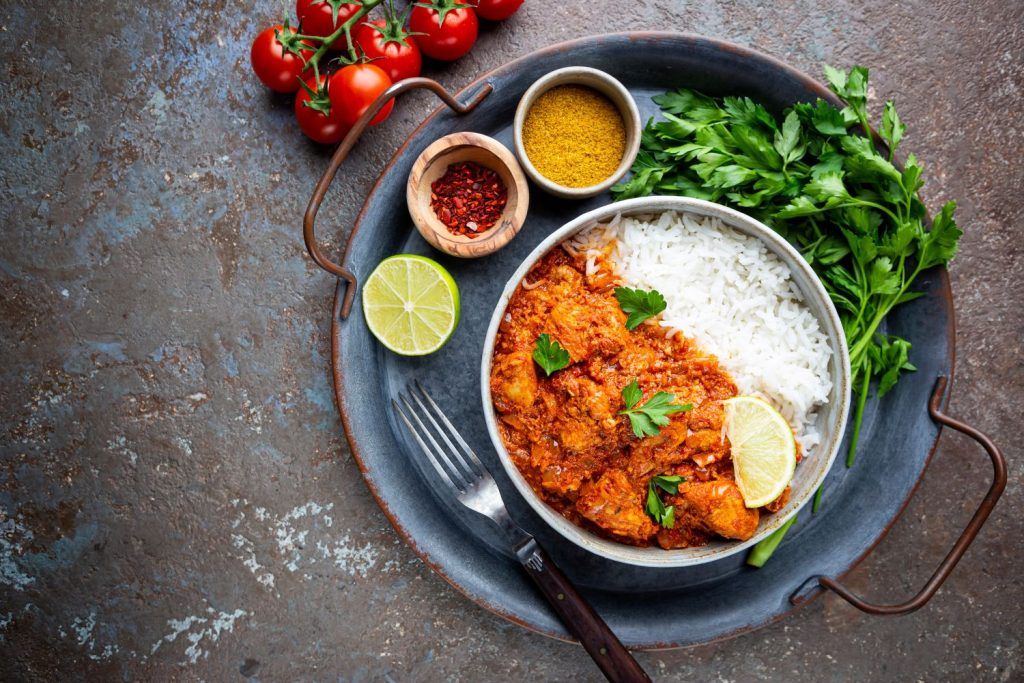
Tikka Masala is one of the world’s most recognized Indian dishes. Tender pieces of protein are cooked in a tomato-based sauce with aromatic spices. The result is creamy, mildly spiced, and deeply comforting.
Beginners love it because:
- It’s flavorful without being intense
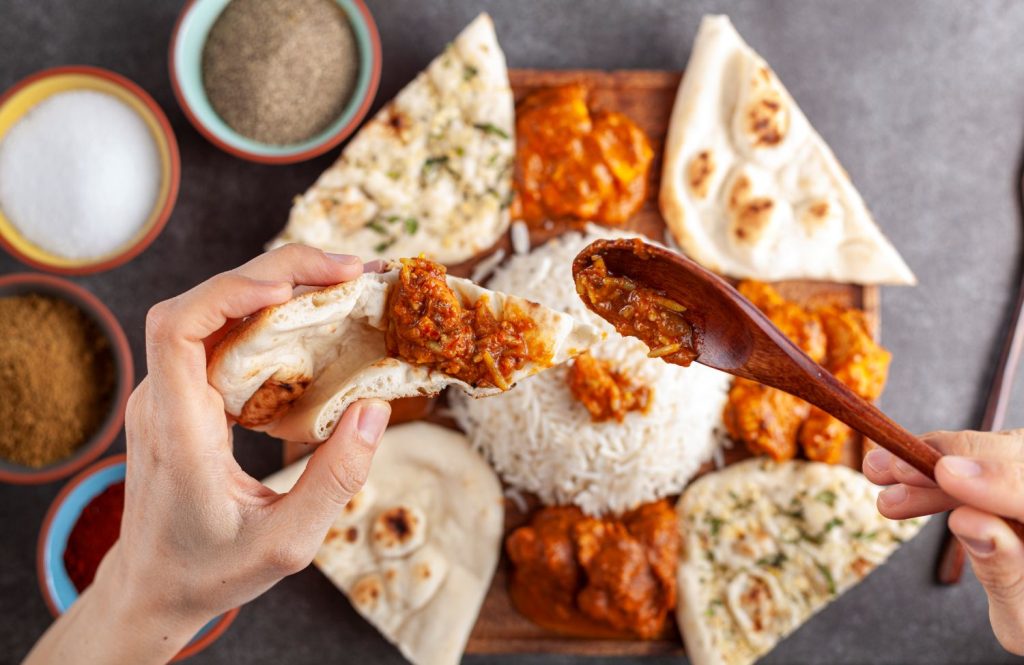
- It pairs perfectly with rice or naan
- The texture is smooth and familiar
People exploring Indian food often compare butter chicken vs tikka masala, since both share a rich tomato-forward profile. While Butter Chicken tends to be slightly sweeter and creamier, Tikka Masala has more layered spices and a mildly smoky undertone.
2. Chicken Vindaloo
Vindaloo comes from Goa, influenced by Portuguese culinary traditions. Historically made with vinegar, garlic, and spices, it offers a tangy, bold, and slightly spiced profile.
For newcomers, Vindaloo is excellent if you prefer:
- Brighter, sharper flavors
- Sauces with more acidity
- A medium heat level
Comparisons like chicken vindaloo vs tikka masala often come from people deciding between a tangier vs. a creamier experience.
3. Saag Paneer
A comfort classic, Saag Paneer is a smooth spinach-based dish made with mild, fresh cheese. It’s aromatic, earthy, and not spicy, making it ideal for beginners of all ages.
Pairs well with:
- Basmati rice
- Garlic naan
- Warm roti
The mildness of the paneer makes this dish especially approachable.
4. Dal (Lentils)
Dal is one of the most foundational foods in Indian home cooking. It’s warm, lightly spiced, and customizable across hundreds of variations.
Great for those who enjoy:
- Stews
- Comforting textures
- Milder flavors
For beginners, it introduces spice blends gently and pairs with almost anything.
5. Korma
Korma dishes are known for their creamy, mild sauces — often incorporating cashews or yogurt for richness. If you’re exploring Indian cashew chicken korma or similar dishes, expect smooth flavors and a gently sweet finish.
Beginners often find korma dishes to be the easiest “first step” into Indian cooking because of their mild heat and familiar creaminess.
Best Pairings for Beginners
For the easiest introduction, pair your dish with:
Rice
- Basmati rice
- Jeera (cumin) rice
- Coconut rice (for South Indian–inspired meals)
Breads
- Naan (soft, chewy, classic)
- Garlic naan (for extra aroma)
- Roti (light, whole-wheat flatbread)
This is why many first-timers search for combinations like chicken tikka masala and naan — it’s simple, comforting, and guaranteed to be enjoyable.
Exploring Indian Cuisine Through Ready-to-Eat Options
For those who want to experience these dishes without cooking from scratch, ready to eat indian meals provide a practical, approachable option.
Modern refrigerated Indian meals focus on:
- Consistent flavor
- Balanced spice blends
- Familiar textures
- Accessibility for busy schedules
For beginners, ready-to-eat options make it easy to try classics like Tikka Masala, Saag Paneer, or Vindaloo without needing a full pantry of spices.
How to Build Confidence as a First-Time Indian Food Explorer
Here are simple ways to ease into Indian flavors:
- Start Mild – Choose dishes with creamy cashew or tomato bases before moving to tangier or spicier curries.
- Pair Familiar with New – If you’re trying something bold like Vindaloo, balance it with rice or naan to soften the heat.
- Experiment at Your Own Pace – Move from Tikka Masala → Saag → Korma → Vindaloo to gradually expand your preferences.
- Pay Attention to Aromas – Indian dishes are as much about aroma as taste. Noticing the spice profiles helps you understand what you like.
Try a Variety of Ready-to-Eat Options – Sampling different dishes can help you determine your favorite flavor profiles before ordering from a restaurant or attempting to cook at home.
A Warm Welcome Into Indian Cuisine
Indian food is vibrant, comforting, and deeply rooted in tradition — but it’s more accessible than many people realize. Whether you start with a creamy curry, a tangy Vindaloo, a mild spinach dish, or a simple dal, you can explore confidently at your own pace.
And if you’re still unsure where to start?
Begin with something mild that pairs easily with rice or naan.
From there, let curiosity guide the rest.